Perhaps the easiest and most cost-effective way to give your home a fresh new look is to simply give the walls a fresh coat of paint. Newly painted walls can give a home a new and updated look, which can go a long way. Make sure to patch any imperfections first and paint in a neutral tone in order to make your home more attractive.
Here are some color ideas:
Pure White
Interesting Aqua
Grizzle Gray
Believable Buff
New Fixtures
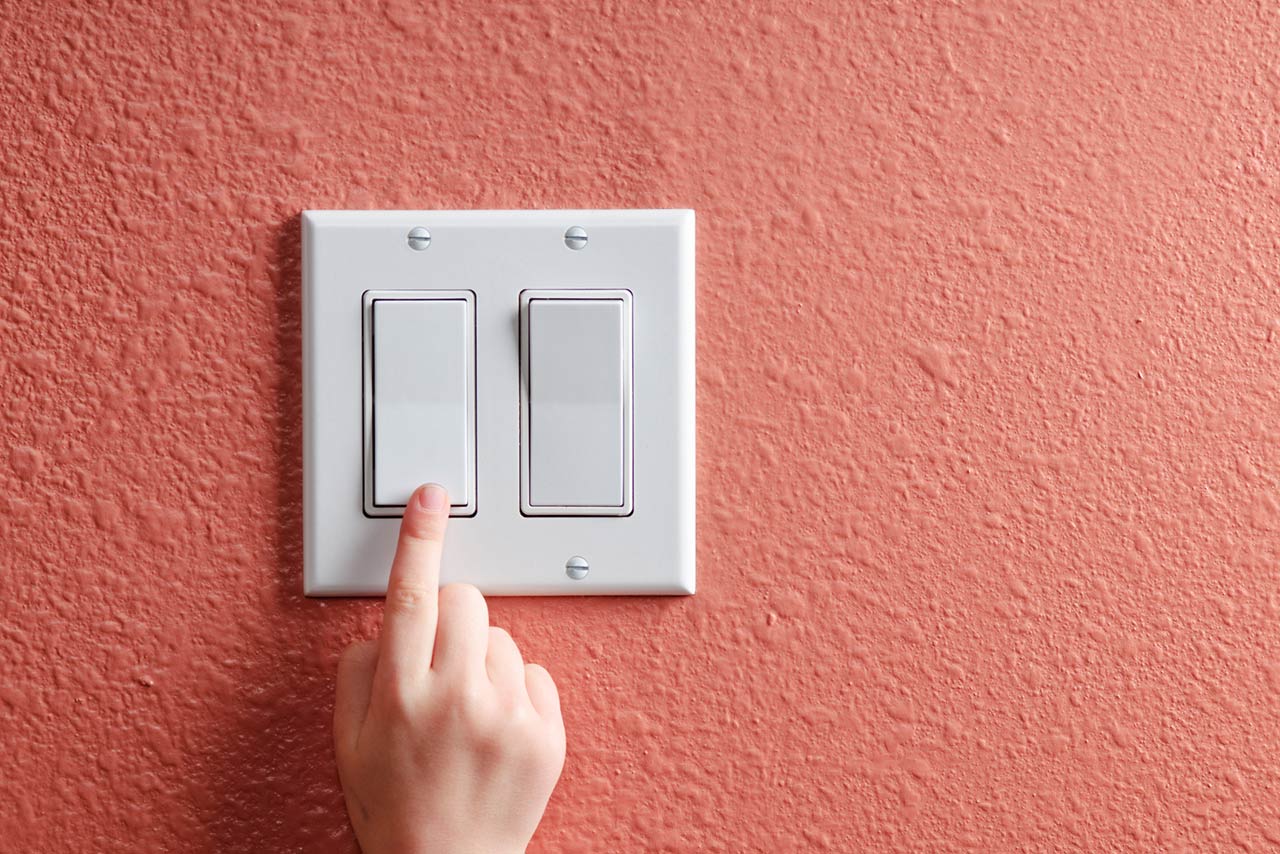
You’d be surprised at how much of a difference little things like door knobs and electrical outlets make to the overall look of a space. Swapping your old fixtures and hardware for newer, more modern ones can give your home just enough of a facelift. Making some small changes can make a dramatic difference in how your home looks.
Here are some fixture ideas:
Lighting
Curtain Rods
Door Handles
Switches
Landscaping
Before you tackle the interior, take a close look at your home’s landscaping. For starters, get rid of any clutter that may have accumulated over the years. Trim the bushes, install some addtional lighting, plant some flowers, and fix any loose stones or pavers along the walkways.
Here are some landscaping ideas:
Pathway Lighting
Concrete Pavers
Easy to Maintain Plants
Gravel & Stones
Updated Window Treatments
Any old drapes or plastic blinds that are covering your windows are just taking away from the esthetics of your home. If your window treatments could use an update, consider making some changes to improve the looks of your windows and potentially even let more natural light in, which is always a good thing.
Here are some window treatment ideas:
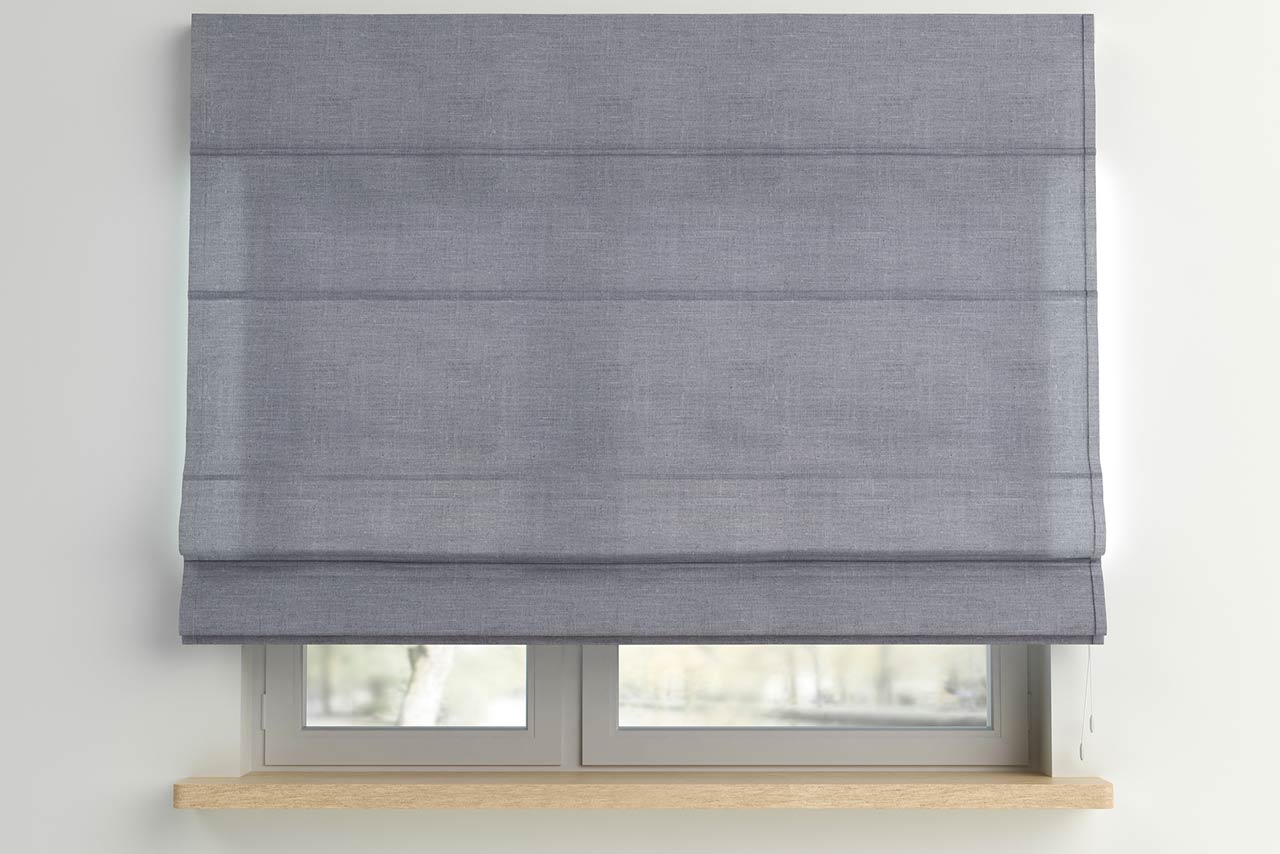
Roman and Roller Shades
Shutters and Blinds
Updated Hardware
Automation and Motorization
https://www.thewrightteam.com/wp-content/uploads/sites/36/2019/08/4-ways-to-give-your-home-a-fresh-new-look-featured.jpg7201280adminhttps://www.thewrightteam.com/wp-content/uploads/sites/36/2022/10/regency-trans.pngadmin2019-08-21 23:08:272019-08-21 23:14:104 Ways to Give Your Home A Fresh New Look
Many purchases that you make come with the option to buy a warranty in the event that the product is damaged, such as small appliances and electronics. This helps cover the cost of repair should they break down so you’re not paying out of pocket.
Warranties also apply to home purchases and offer buyers some peace of mind knowing that the major components and systems of the property are covered in case something goes wrong after you take possession. While they’re certainly not mandatory to buy, home warranties can help alleviate any concerns that you might have about anything malfunctioning in the home, and will be of financial assistance should anything go awry.
That said, it’s important to understand exactly what is covered under home warranties before you buy into one, as not necessarily everything under your roof will be covered.
The specific coverage offered will depend on the plan that you choose and the items you want to be covered, as all home warranty plans differ. The warranty company that holds your policy will replace or make any necessary repairs on any covered item that breaks down as a result of normal wear and tear according to the plan’s terms.
It’s critical for homeowners to fully understand precisely what is included in the home warranty in order to avoid the disappointment of a rejected claim.
That said, certain items are typically included in basic coverage, including the following:
Electrical system components
Plumbing systems
Ovens and stovetops
Dishwashers
Built-in microwaves
Water heaters
Exhaust fans
Sump pumps
Of course, homeowners may opt to upgrade their coverage in order to have more items included in their home warranties, such as:
Air conditioner units
Refrigerators
Washers and dryers
Central vacuums
Pools
Hot tubs
Garage door openers
Septic systems
Have Your Home and its Components Inspected Before Taking Out a Policy
If there’s something wrong with any one of the components in your home that you want covered, it’s possible that the warranty company you’re with will refuse to approve your claim. They’re covered under what’s known as a “pre-existing condition” clause that basically states that the company will not cover any component that already had an underlying condition.
In order to avoid the frustration of having your claim denied, it’s advisable to have your home and its components inspected first if your warranty does not cover pre-existing conditions.
What Constitutes a Denied Claim?
A pre-existing condition isn’t the only thing that could result in a rejected claim. Other issues that could leave you empty-handed include inadequate maintenance, improper installation, excessive and unnecessary wear and tear, and violations of building codes. Make sure none of these apply to you before you attempt to file a claim for a malfunctioning component.
Isn’t a Home Warranty the Same as Homeowner’s Insurance?
After reading about what home warranties are, you might be wondering how they differ from homeowner’s insurance plans. Granted, they do sound somewhat similar, but they’re certainly not the same thing.
Home warranties are designed to protect the systems and appliances of homes from any malfunctioning that is caused by normal wear and tear. On the other hand, homeowner’s insurance covers damages and loss as a result of issues out of your control, such as fires, natural disasters, or theft. They don’t cover anything that simply breaks down after normal use. That’s where a home warranty enters the picture.
The Bottom Line
It’s always important to look over your home warranty policy in great detail to understand exactly what items in your home will be covered. If you want more coverage for additional items that are not part of your basic policy, you’ll need to pay extra for these to be included. Even if you currently have a home warranty that you’ve been paying for every year, you should still look it over in the event that your coverage changes.
https://www.thewrightteam.com/wp-content/uploads/sites/36/2019/08/what-you-need-to-know-about-home-warranty-plans-featured.jpg7201280adminhttps://www.thewrightteam.com/wp-content/uploads/sites/36/2022/10/regency-trans.pngadmin2019-08-13 22:21:422019-08-13 22:25:35What You Need To Know About Home Warranty Plans
Hunting for a new home online is a great place to start your search, but it should not be your end all be all. Good listing agents are excellent at highlighting the best features of the home, but keep in mind there may be more than meets the eye. To make the most of your time and efforts and gather a well-rounded picture of home listings online, keep the following three things in mind.
Stay up to date
When you start your search, make sure you find a site that pulls up-to-date listings directly from the multiple listing service (MLS) where real estate agents actively post their most current homes for sale. Many online resources update less often or fail to remove listings that are off the market, making it more difficult to sort through the clutter.
Pictures can be deceiving
Real estate photographers are experts at showing a home in the best possible light. Many use tools and strategies to boost appeal, such as a fisheye lens to make areas look larger and creative editing to make colors and textures really pop. But, often listings will not contain photos of unappealing parts of the home, like small closets or outdated bathrooms.
See it to believe it
Once you find what appears to be your dream home online, call up your real estate agent and schedule a showing. You want to take the opportunity to vet the home in person and explore every part of it before beginning the offer process. Your real estate agent will help you cover all your bases and will ask questions you may not have thought of.
https://www.thewrightteam.com/wp-content/uploads/sites/36/2019/08/article-080619-featured.jpg7201280adminhttps://www.thewrightteam.com/wp-content/uploads/sites/36/2022/10/regency-trans.pngadmin2019-08-07 00:49:422019-08-07 01:24:46Top Tips For House Hunting Online
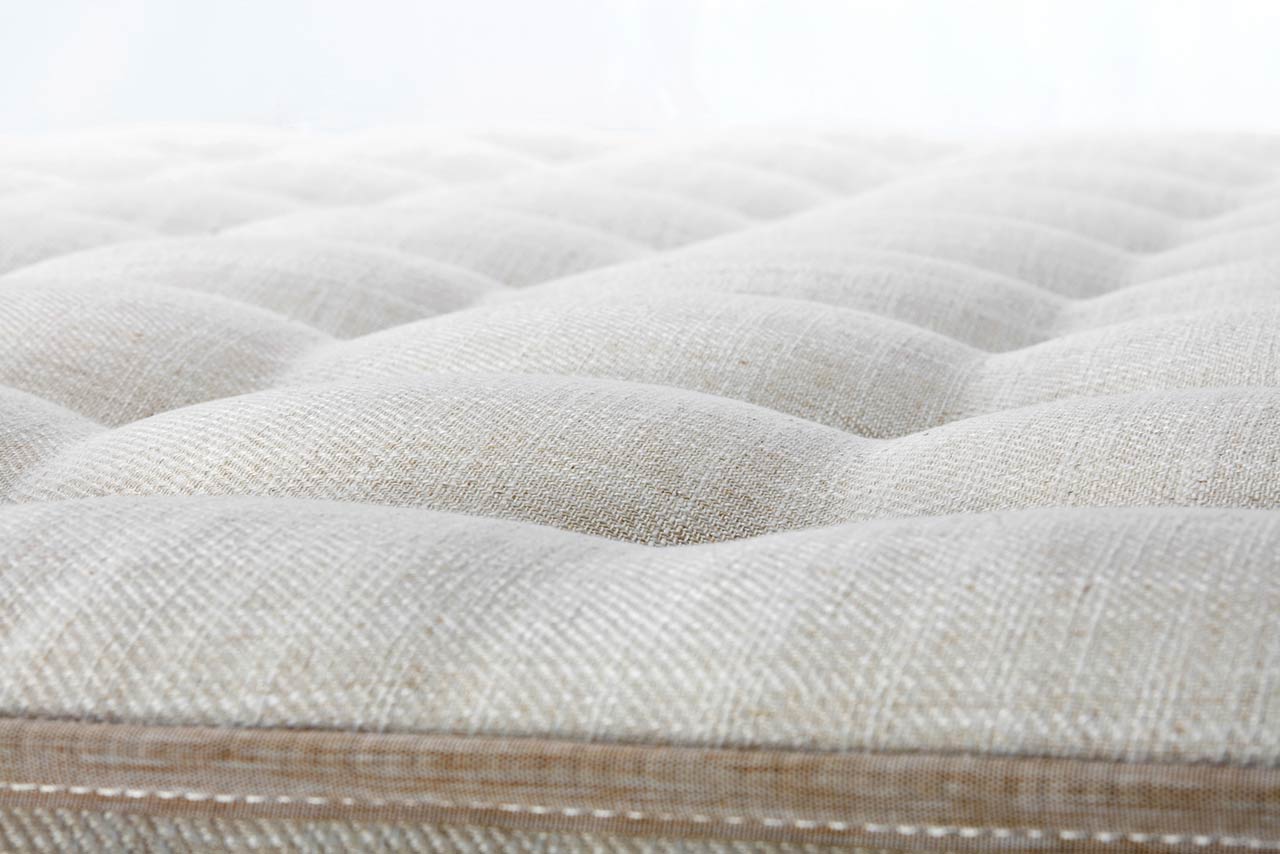
You’ve got more options than ever when mattress shopping these days with no shortage of brick-and-mortar and online-only retailers to choose from. Here are the factors you should consider when you’re shopping for a perfect night’s sleep.
1. Mattress construction: The most popular mattress types are inner spring mattresses, memory foam mattresses, and adjustable air mattresses. Each has pros and cons when it comes to durability and comfort customization.
2. Firmness: Mattress firmness plays a huge role in the quality of your sleep. Mattresses that are too firm or too soft can cause aches and pains, so it‘s recommended that you test a mattress for 10- to 15 minutes in store before making a purchase.
3. Sleeping position: Your mattress should match your sleeping style (side, back, face-down, etc.). You want a mattress that keeps your spine in proper alignment. For example, some mattresses are better for side sleepers, while others are better for back sleepers.
4. Size: It’s not quite as simple as choosing between a king and a queen mattress. You should also consider your height, as some mattresses are a better fit for shorter people while tall people will want a longer mattress so their limbs aren’t hanging over the edge of the bed.
5. Stability: For couples, you should consider how the mattress reacts when one person moves, so the other person’s sleep isn’t disturbed in the middle of the night.
https://www.thewrightteam.com/wp-content/uploads/sites/36/2019/07/finding-the-right-mattress-featured.jpg7201280adminhttps://www.thewrightteam.com/wp-content/uploads/sites/36/2022/10/regency-trans.pngadmin2019-07-31 03:24:332019-07-31 03:32:26Finding The Right Mattress
“Refinancing” is a scary word for many people, but that shouldn’t be the case for you. For many homeowners, refinancing can not only lower your monthly payments and help with your monthly budget, but it can save you thousands of dollars in the long run.
YOU’RE NOT TOO LATE
For years now, we’ve been hearing that interest rates will be on the rise, and although there have been some small increases, you’re still in a great position to drastically lower your interest rate. The general rule is if your mortgage interest rate is more than one percent above the current market rate, you should consider refinancing.
IT’S NOT TOO TIME CONSUMING
Don’t brush off refinancing just because it seems like a long and daunting process. An informational call with a lender to see how rates compare will only take a few minutes. There are also some programs for streamlining the application process. And besides, isn’t the amount of money you could save worth the time and effort?
ARMS CAN BE REFINANCED, TOO
Seeing your Adjustable Rate Mortgage (ARM) increase after the introductory period can be incredibly stressful and place a squeeze on your budget. Many people assume they’re stuck, but ARMs can be refinanced, just like fixed-rate mortgages. You can even switch to a shorter term fixed-rate mortgage, such as 15 or 23 years. The longer you’re planning to stay in the home, the more sense it makes to look into refinancing.
Negotiation is a subtle art in real estate, but skilled negotiators can usually find some common ground that satisfies all parties. On the other hand, using the wrong negotiation tactics can sink a deal pretty quickly. Here are some negotiation tactics buyers should avoid:
LOWBALL OFFERS
Going far below market value when you make an offer damages your credibility as a buyer and can be insulting to the seller. The seller has a range in mind that they’ll accept, and if you’re not even approaching the low end of that range, they won’t even consider the offer.
INCREMENTAL NEGOTIATIONS
Don’t continue to go back to the seller with small increases in your offer ($1,000 or less). The constant back-and-forth can grow tiresome and lead the seller to consider other opportunities.
“Take it or leave it”: Try not to draw a line in the sand with your initial offer. The seller can get defensive and consider other offers if you immediately show that you’re unwilling to budge. Even if it’s true, don’t make a show of it.
NITPICKING AFTER INSPECTION
Obviously if inspection reveals a major issue, it should be factored into the final sale price. But insisting on a lower price for every minor repair can put negotiations in a stalemate.
ASKING FOR MORE, MORE, MORE
Some buyers will request that the sellers throw in add-ons like furniture or appliances that weren’t included in the listing. Try to avoid giving the seller a reason to build up resentment and think that you’re being greedy.
THE BOTTOM LINE
While there are things you can do to help boost your odds of a successful deal, there are a number of others that can prevent the sale from happening. WHEN BUYING A HOME, ALWAYS FOLLOW THE ADVICE OF YOUR REAL ESTATE AGENT.
https://www.thewrightteam.com/wp-content/uploads/sites/36/2019/07/5-negotiating-tactics-featured-070919.jpg7201280adminhttps://www.thewrightteam.com/wp-content/uploads/sites/36/2022/10/regency-trans.pngadmin2019-07-10 01:13:012019-07-10 01:36:205 Negotiating Tactics That Can Hurt A Sale
From replacing cabinet doors, to burned-out light bulbs, to everything in between, all sorts of scenarios will sneak up on a regular basis in your home that will require your handiwork. Even things like hanging a picture on the wall or measuring rooms for furniture require some type of tool to get the job done.
Unless you plan on calling the local handyman every time you need something done, you’d be well-advised to get yourself a set of tools so you don’t have to break the bank paying someone else to do something you easily can accomplish with the right tool.
Hammer
Owning a good quality hammer is a necessity. Whether you’re hanging art, pulling nails out, or just tapping things into place can all be done a lot easier with a hammer than with a random object. The one you get should feel well-balanced and allow you to grip the handle firmly and securely. You might even be able to get away with a smaller and lighter claw hammer if your hands are petite, though these versions aren’t as efficient as full-sized hammers.
Cordless Drill
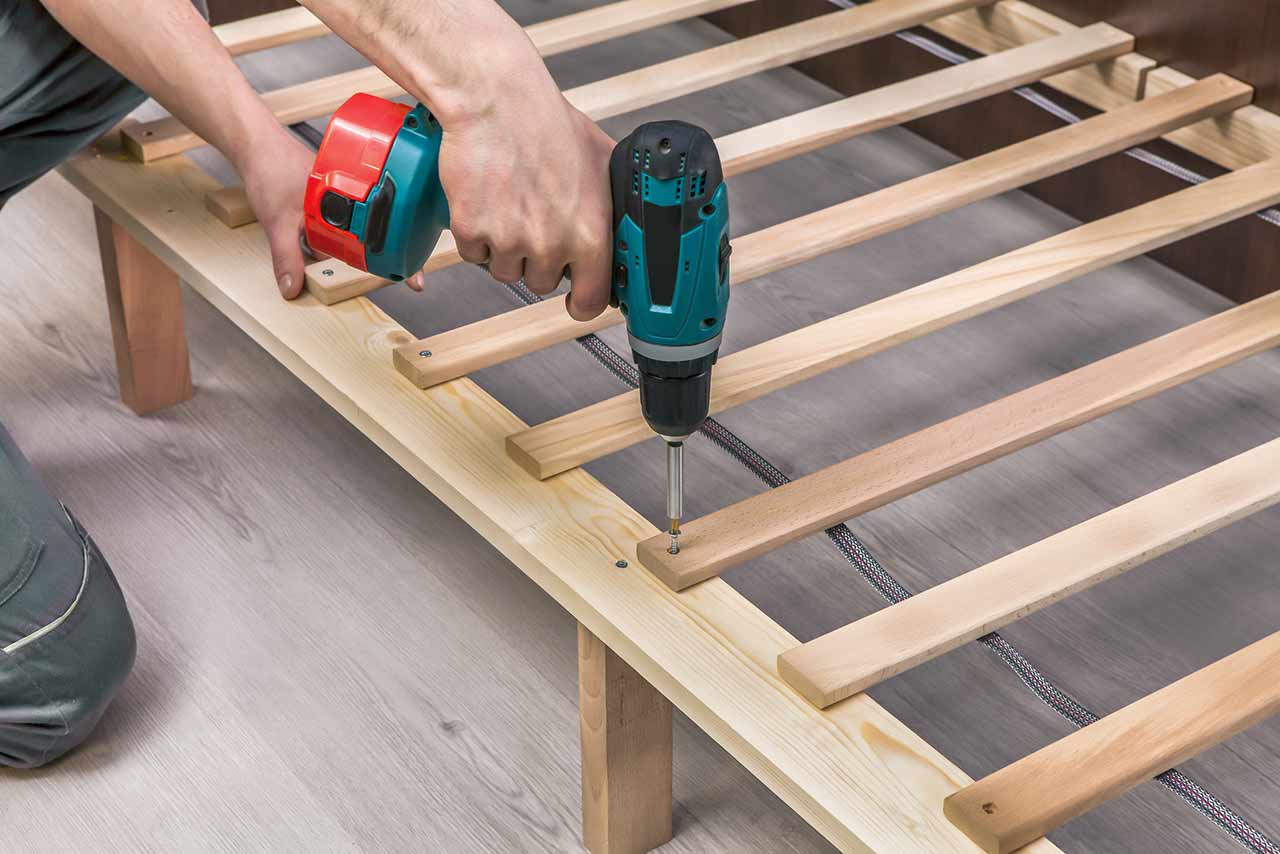
A cordless drill is another very common tool that will make your life easier. If you plan on assembling furniture, for instance, a cordless drill is a necessity. There are many types of screw heads these days so make sure you have a wide variety on-hand. A cordless drill will ensure that you get the job done a lot faster without tiring your hands out.
Tape Measure
You’d be amazed at how many times you’ll be whipping out this tool at home. Buying new furniture? Installing some floating shelves? Hanging artwork? Then you’ll need measuring tape to make sure your furniture fits in your space and your shelves aren’t on a 45-degree angle. A standard 30-foot metal tape measure that locks in place should suffice.
Level
Speaking of making sure your shelves and artwork aren’t crooked, a level is another necessary tool to have in your collection. Get yourself one that’s around 3 feet long, which you’ll get the most use of.
Pliers
This handy tool is essential for tightening or loosening up just about every type of hardware, such as plumbing pipes. You can choose from a variety of options, including grove-joint pliers that are adjustable to grasp large or small items, and needle-nose pliers are great when you’re dealing with any type of wire. Get yourself a pair or two that lock, which make them a lot easier to work with.
Utility Knife
Imagine trying to cut through cardboard boxes or old wallpaper with a regular kitchen knife. Without a high-caliber tool, jobs like these are a lot more tedious. With a standard-size utility knife, cutting through tough material is a breeze. Always remember to keep this one in a safe place.
Ladder
Unless you’re 8 feet tall, you’ll probably find it a lot easier to change light bulbs, paint higher areas, or access something from an upper shelf using a ladder. At the very least, a step stool can help.
Putty Knife
If you’ve got any holes in the walls from where the previous owners hung their photos, or you simply made a mistake when hammering in your own nails and hooks, these holes will need to be filled and painted over. The way to fix them is by filling them with spackle or putty, but you can’t apply this goopy stuff with just any tool.
A putty knife will let you evenly spread the material to ensure a smooth finish that you won’t even notice after you’ve painted over the area. Consider getting yourself a couple of different sizes – wider ones are good for spreading, and narrower ones are ideal for scraping.
https://www.thewrightteam.com/wp-content/uploads/sites/36/2019/07/8-must-have-tools-featured.jpg7201280adminhttps://www.thewrightteam.com/wp-content/uploads/sites/36/2022/10/regency-trans.pngadmin2019-07-02 23:12:052019-07-02 23:53:588 Must-Have Tools For Every Homeowner
As unfortunate as it can be when homeowners fall behind on mortgage payments and must face the possibility of losing their homes, short sales and foreclosures provide them options for moving on financially. The terms are often used interchangeably, but they’re actually quite different, with varying timelines and financial impact on the homeowner. Here’s a brief overview.
SHORT SALES
A short sale comes into play when a homeowner needs to sell their home but the home is worth less than the remaining balance that they owe. The lender can allow the homeowner to sell the home for less than the amount owed, freeing the homeowner from the financial predicament.
On the buyer side, short sales typically take three to four months to complete and many of the closing and repair costs are shifted from the seller to the lender.
FORECLOSURE
On the other hand, a foreclosure occurs when a homeowner can no longer make payments on their home so the bank begins the process of repossessing it. A foreclosure usually moves much faster than a short sale and is more financially damaging to the homeowner.
After foreclosure the bank can sell the home in a foreclosure auction. For buyers, foreclosures are riskier than short sales, because homes are often bought sight unseen, with no inspection or warranty.
https://www.thewrightteam.com/wp-content/uploads/sites/36/2019/06/short-sale-and-foreclosure-featured.jpg7201280adminhttps://www.thewrightteam.com/wp-content/uploads/sites/36/2022/10/regency-trans.pngadmin2019-06-28 23:16:282019-06-28 23:20:14Short Sale And Foreclosure: What Sets Them Apart?
Organic food usually tastes better, and is better for you, but it can also be very expensive compared to non-organic products. Organic food can cost nearly 50 percent more, thanks to the extra labor required to produce it and consumers’ demand exceeding supply.
So how do you get tasty organic food without spending a ton of extra money? Follow these tips to get more bang for your buck.
SHOP AT FARMERS’ MARKETS
You can get fresh organic produce for far less at a farmers’ market than you’d pay at the grocery store. It’ll taste just as good, and you’re getting your food straight from the source.
CHOOSE SEASONAL PRODUCE
Out-of-season produce usually has to be imported, and that can really drive up the price. Focus your meals on in-season fruits and vegetables so that you don’t end up paying $6.00 for a pound of organic asparagus.
SHOP MORE FREQUENTLY
The trick here is to only buy what’s needed for your meals, and to only plan for a week of meals at most. That way you’re less likely to throw food away, because you can use leftover produce for more meals before it goes bad.
GROW YOUR OWN
A home vegetable garden will provide some extremely cheap organic produce, and gardening can also be a fun and rewarding hobby.
https://www.thewrightteam.com/wp-content/uploads/sites/36/2019/06/4-tips-on-how-to-shop-for-organic-food-on-a-budget-featured.jpg7201280adminhttps://www.thewrightteam.com/wp-content/uploads/sites/36/2022/10/regency-trans.pngadmin2019-06-26 00:07:162019-06-26 00:16:054 Ways To Eat Organic Food On A Budget
Moving into a new home is an exciting time, and you’re probably daydreaming about decor and paint schemes and new furniture. But before you get into the fun stuff, there are some basics you should cover first.
Change the locks
Even if you’re promised that new locks have been installed in your home, you can never be too careful. It’s worth the money to have the peace of mind that comes with knowing that no one else has the keys to your home. Changing the locks can be a DIY project, or you can call in a locksmith for a little extra money.
Steam clean the carpets
It’s good to get a fresh start with your floors before you start decorating. The previous owners may have had pets, young children, or just some plain old clumsiness. Take the time to steam clean the carpets so that your floors are free of stains and allergens. It’s pretty easy and affordable to rent a steam cleaner—your local grocery store may have them available.
Call an exterminator
Prior to move-in, you probably haven’t spent enough time in the house to get a view of any pests that may be lurking. Call an exterminator to take care of any mice, insects, and other critters that may be hiding in your home.
Clean out the kitchen
If the previous occupants wanted to skip on some of their cleaning duties when they moved out, the kitchen is where they probably cut corners. Wipe down the inside of cabinets, clean out the refrigerator, clean the oven, and clean in the nooks and crannies underneath the appliances.
https://www.thewrightteam.com/wp-content/uploads/sites/36/2019/06/priority-tasks-for-your-move-in-featured-1.jpg7201280adminhttps://www.thewrightteam.com/wp-content/uploads/sites/36/2022/10/regency-trans.pngadmin2019-06-21 23:52:202019-06-22 00:01:31Priority Tasks For Your Move In